
Savannah, GA Water Treatment
Clean, Soft Waterfor Savannah Homes
Whole-home filtration, salt-free conditioning and reverse osmosis built for Savannah's city water and the Floridan Aquifer wells around it. Installed by our local team.
Your local water
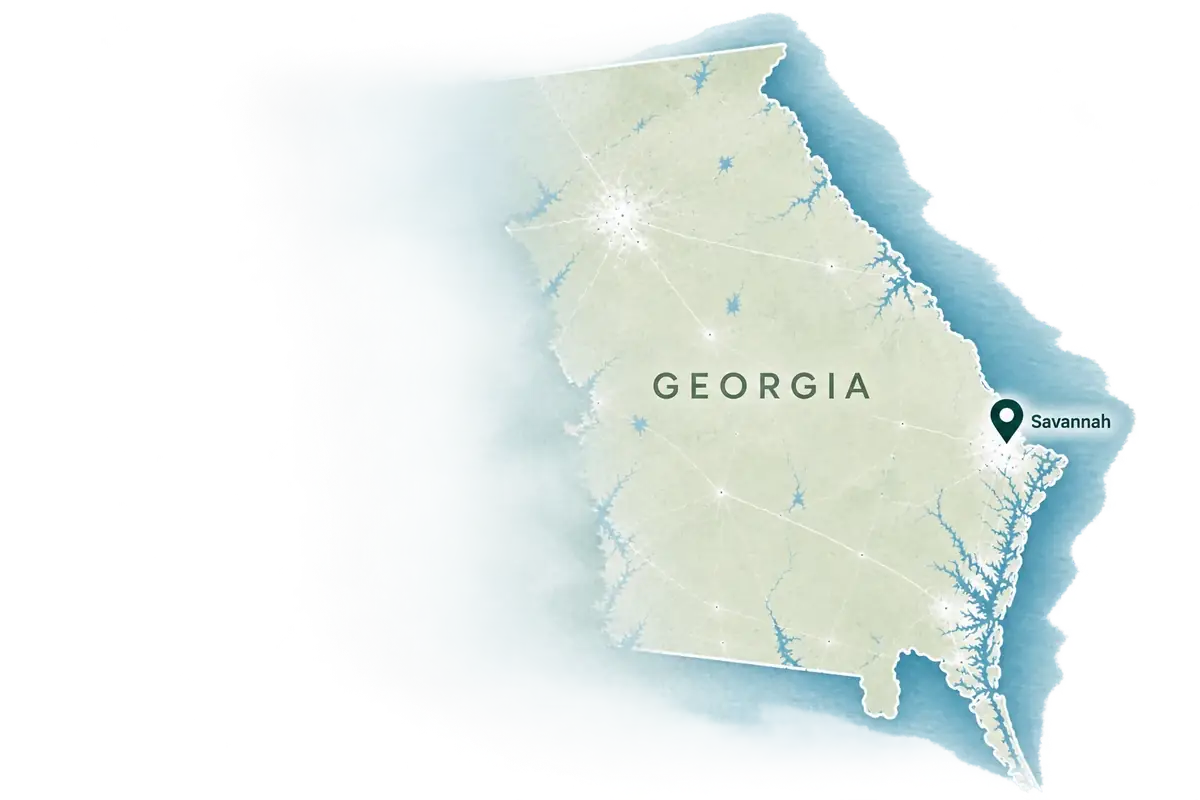
Where Savannah's Water Comes From
Savannah draws from two very different sources, and they are treated differently. That is why two homes a few miles apart can have water that tastes and smells different, and why the right filter depends on your address.
City wells
Most of the City of Savannah's water is pumped from deep wells in the Floridan Aquifer, hundreds of feet below the surface. It is disinfected with chlorine before it reaches your tap.
Savannah I&D plant
The Industrial & Domestic plant treats water from Abercorn Creek, a tributary of the Savannah River. Ammonia is added to form chloramine for part of the system, including areas like Port Wentworth and Travis Field. Pooler and Garden City blend in this water too.
Chloramine is the norm
Surface water utilities across the Lowcountry use chloramine. Beaufort-Jasper Water & Sewer Authority, which serves Bluffton, Beaufort and much of the region, disinfects with chloramine.
Chloramine
Why Chloramine Needs a Different Filter
Chloramine is chlorine combined with ammonia. Utilities use it because it lasts longer in the pipes, but that same staying power makes it harder to remove at home.
- Regular carbon is not enough. Standard carbon removes chlorine quickly, but chloramine needs catalytic carbon and more contact time.
- You can't boil or air it out. Unlike chlorine, chloramine does not fade from a pitcher left on the counter.
- It reaches every tap. Showers, laundry and ice makers all see it, so whole-home treatment matters, not just the kitchen sink.
- Fish tanks and dialysis. Chloramine must be removed before water goes into an aquarium or a home dialysis machine.
Not sure which water you have?
Your utility's annual water quality report lists the disinfectant it uses, or we can test your water at your home. Either way, our city water systems use catalytic carbon, so they handle both chlorine and chloramine.
On a private well? Floridan Aquifer wells near the coast often carry hydrogen sulfide (the rotten egg smell) and iron. That calls for a well system, not a city filter.
Contaminants detected
What's Been Found in Savannah Water
The Environmental Working Group (EWG) collects utility testing data and compares it with its own health guidelines, which are much stricter than federal legal limits. A level under the legal limit is legal; EWG flags it because research suggests health risks at lower levels. Activated carbon reduces disinfection byproducts like TTHMs and HAA5, and reverse osmosis reduces PFAS, arsenic, chromium-6, radium and nitrate.
City of Savannah (Main)
EWG data, 2014–2023
City of Pooler
EWG data, 2014–2024
Beaufort-Jasper (BJWSA)
EWG data, 2013–2024
Levels are utility averages from the EWG Tap Water Database. The PFOA and PFOS limit of 4 ppt is EPA's federal standard, with compliance required by 2031. Look up your ZIP code on EWG →
Recommended for Savannah
Systems That Fit Savannah Water
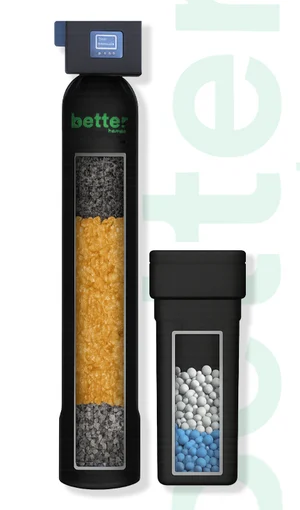
Our Standard System pairs catalytic carbon, which removes chlorine and chloramine, with a softener for scale-free water. It is the system we recommend most in Savannah.
City water
Standard System
Catalytic coconut shell carbon plus a softener in one system. Removes chlorine and chloramine and stops hard water scale. Our most popular system.
See details & pricing →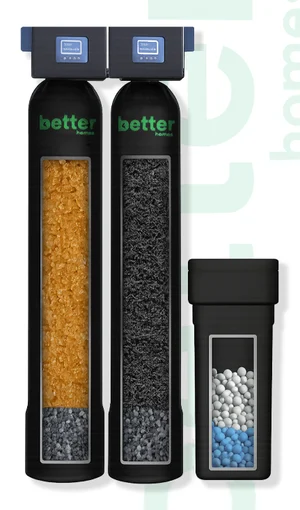
City Water Dual Tank
A catalytic carbon tank and a softener tank, each with its own valve, for chlorine-free, fully soft water.
See details & pricing →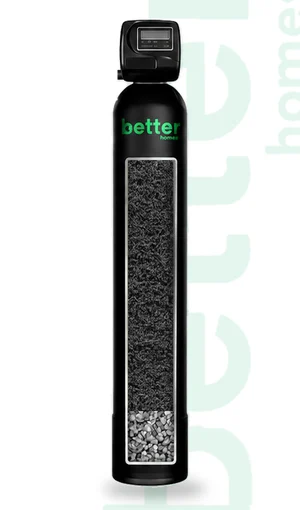
Catalytic Carbon Tank
A single catalytic carbon tank that removes chlorine, chloramine and the tastes and odors they cause at every tap.
See details & pricing →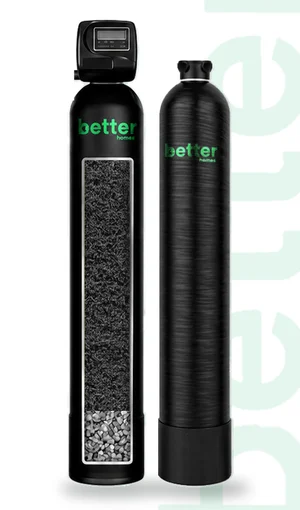
Catalytic Carbon + Salt-Free Conditioner
Removes chlorine and chloramine and conditions hardness with no salt and no brine tank.
See details & pricing →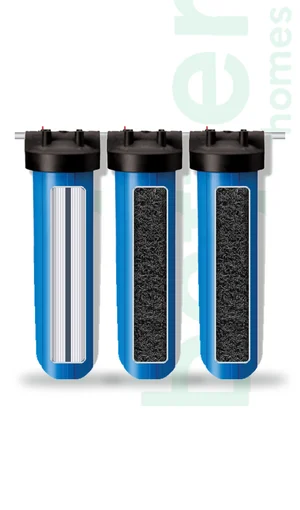
3-Cartridge Carbon System
A compact system with a sediment filter and two carbon blocks that remove chlorine, chemicals, taste and odor at every tap.
See details & pricing →Private well water
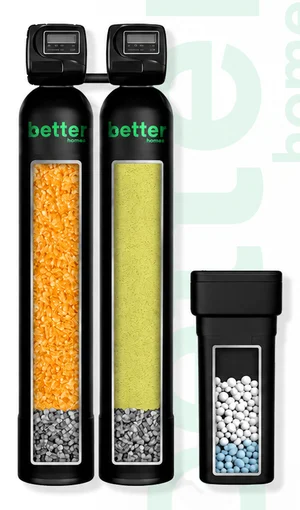
AIO Dual Tank Well System
Katalox Light for sulfur, iron and manganese, plus a softener for hard well water.
See details & pricing →Standard System
Catalytic coconut shell carbon plus a softener in one system. Works on many wells with hard water and mild taste or odor.
See details & pricing →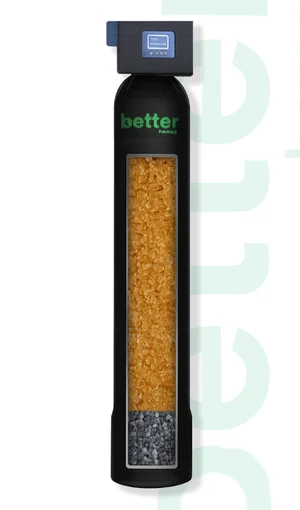
Whole Home Water Softener
Removes the calcium and magnesium that cause scale. On well water without much sulfur or iron, a softener alone is often all you need.
See details & pricing →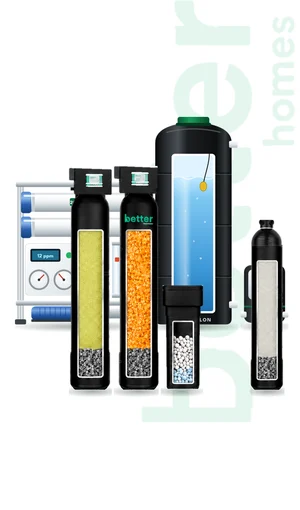
Whole Home RO for Well Water
AIO air injection and Katalox Light remove iron, manganese and sulfur, then a softener and a 2,000 GPD membrane deliver purified water to every tap.
See details & pricing →Service area
Serving Savannah & Nearby Communities
Our Savannah team installs and services systems across Chatham County, the surrounding Georgia coast and the South Carolina Lowcountry.
FAQ
Savannah Water Questions
Does Savannah use chlorine or chloramine?
Both. The City of Savannah's Floridan Aquifer wells are disinfected with chlorine, while the I&D surface water plant adds ammonia to form chloramine for part of its system. Many Lowcountry utilities, including Beaufort-Jasper Water & Sewer Authority, use chloramine. Your utility's annual water quality report names its disinfectant.
Is Savannah water hard?
Savannah's city water is only slightly hard, at roughly 54 to 57 mg/L (about 3 grains per gallon). A softener removes that hardness completely. Private wells can be much harder and often need a well system.
Will a regular carbon filter remove chloramine?
Not well. Standard carbon removes chlorine, but chloramine needs catalytic carbon and longer contact time. Our city water systems use catalytic carbon so they handle both.
What contaminants are in Savannah water?
According to the EWG Tap Water Database, the most common detections in Savannah-area water are disinfection byproducts (TTHMs and HAA5), plus trace arsenic in the City of Savannah system and trace PFAS in Pooler and BJWSA water. The levels are below federal legal limits but above EWG's stricter health guidelines. Activated carbon reduces disinfection byproducts, and reverse osmosis reduces PFAS and arsenic.
Why does my well water smell like rotten eggs?
Wells in the Floridan Aquifer near the coast often contain hydrogen sulfide gas, which causes the smell, along with iron. An AIO Katalox Light system removes it. For the most severe sulfur, we use hydrogen peroxide injection.
Do you install outside the city of Savannah?
Yes. We serve Pooler, Richmond Hill, Port Wentworth, Garden City, Rincon, Guyton and the islands, plus Bluffton, Hilton Head Island, Beaufort and Hardeeville in South Carolina. Call or text (850) 680-6598 to check your address.
Talk to our Savannah team
Ready for Better Water?
Tell us about your home and water, and we'll get back to you within 24 hours with the right system for your address.
Better Homes Savannah112 Picket Row
Savannah, GA 31410
(850) 680-6598 · [email protected] Call or Text Now
Sources: EWG Tap Water Database; City of Savannah I&D Water Treatment Facility annual water quality report; Beaufort-Jasper Water & Sewer Authority; City of Pooler annual water quality report. Hardness figures are typical values and vary by location.